Older Bungalows and Original Ductwork: What to Expect
What duct cleaning looks like in an older bungalow: retrofitted ducts, gravity-furnace leftovers, old insulation wrap, small returns and tight basements.
Older bungalows are a big part of the housing around Englewood, and they are easy to love: solid brick, front porches, built-in cabinets and real plaster walls. Their heating systems are another story. Many of these homes have been through several generations of equipment, and the ductwork you have today may be a patchwork of original pieces and later additions.
If you own an older bungalow and are thinking about duct cleaning, here is what to expect, what we look for and what sometimes needs another specialist first.
How older homes ended up with the ducts they have
Many early 20th-century homes were not built with the forced-air systems we use now. Some were heated by boilers and radiators. Others had gravity furnaces: big, octopus-shaped units in the basement that relied on warm air rising through large ducts, with no blower at all.
Over the decades, those systems were replaced. In some homes, a modern furnace was connected to the old gravity ducts. In others, new ductwork was installed from scratch, routed through closets, under stairs and along basement ceilings wherever it could fit. Air conditioning, if it was added, often came later still.
The result is that two bungalows on the same block can have very different systems. One might have a tidy trunk-and-branch layout from a remodel. The next might still have a few original round ducts mixed with newer rectangular runs.
What we usually find inside
Every house is different, but older systems tend to share a few traits:
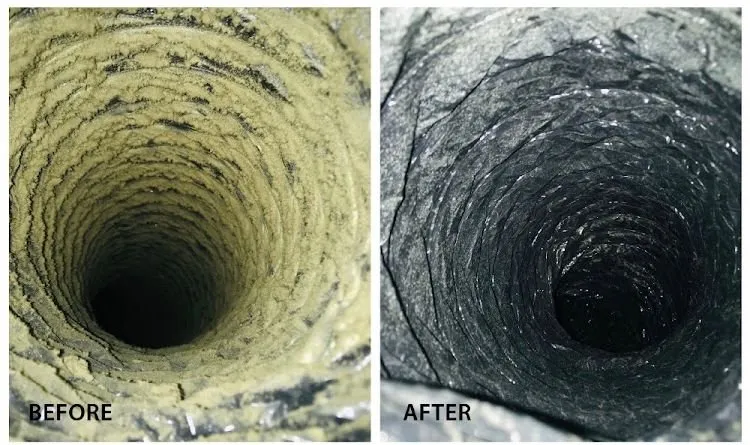
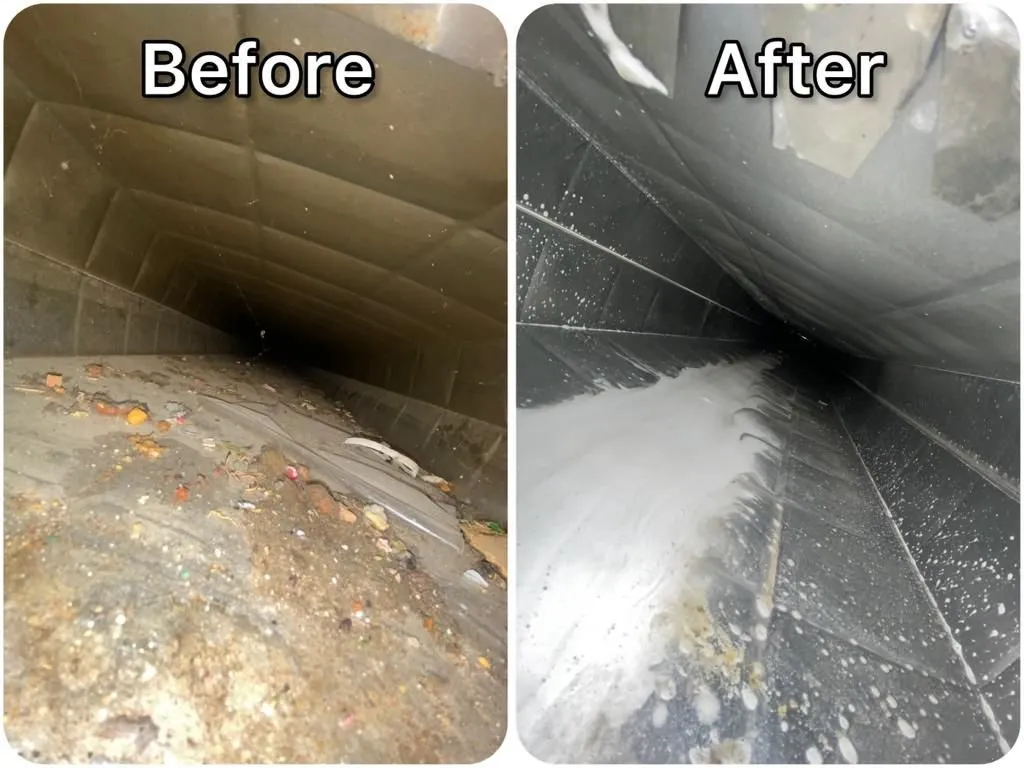
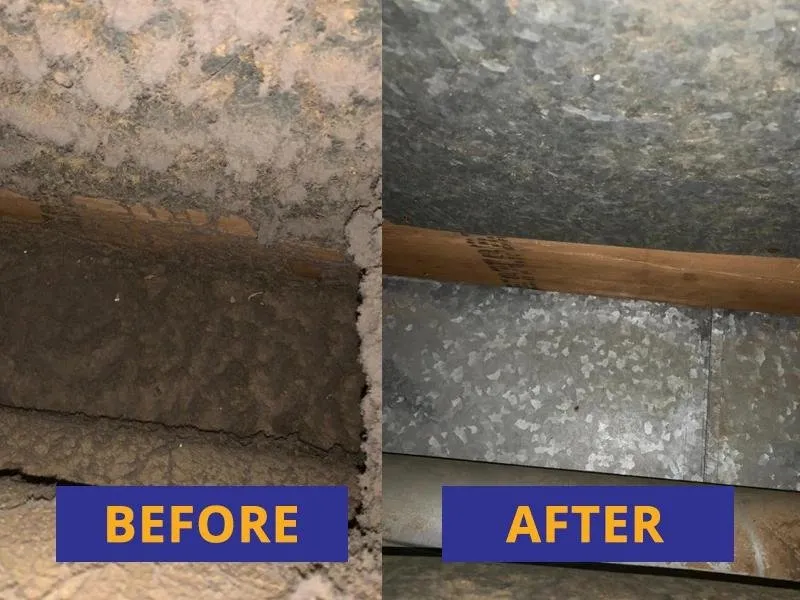
- Decades of buildup. Original ducts that have never been cleaned can carry a heavy layer of dust and debris, especially in the returns and at the bottom of horizontal runs.
- Few returns. Many older homes have just one or two return grilles, often in a central hallway or the living room floor. Those returns do a lot of work and collect a lot of dust.
- Floor registers. Bungalows often have registers set in the floor, which catch dirt, pet hair, small toys and anything else that rolls in.
- Odd transitions. Where new equipment meets old ducts, there may be awkward fittings, sharp bends or sections that were patched with tape.
- Abandoned runs. Some ducts lead nowhere anymore, capped off during a remodel. They can still hold old debris.
None of this is unusual, and most of it can be cleaned. It just takes more care than a recent subdivision home with a simple, accessible layout.
The asbestos question
This is the most important part of working on an older system. Some ducts in homes from the early and mid-20th century were wrapped in white or gray insulation, or have tape or paper at the joints, that may contain asbestos. The EPA advises that material suspected of containing asbestos should be left alone if it is in good condition, and tested by a qualified professional before anyone disturbs it.
If you see wrap or tape like that, have it tested before any duct work is done. That is not a step to skip. We do not handle asbestos testing or removal, so a licensed asbestos professional is the right call.
Basements, crawlspaces and access
Bungalows usually have a basement or crawlspace, and that is where the furnace and main ducts live. Older basements can be tight, with low ceilings, stored items and plaster or drywall that has closed off parts of the system over the years.
Before a cleaning, it helps to:
- Clear a path to the furnace and the main return.
- Move boxes and shelving away from duct runs where you can.
- Point out any rooms where the vents never seemed to work well.
- Note any recent remodel work, since construction dust can end up in the system.
If a finished basement has covered parts of the ductwork, the accessible sections and the registers can still be cleaned through the openings.
Signs it is time
The EPA suggests considering duct cleaning when the ducts are clogged with excessive dust and debris, when particles are visibly blowing from the registers, or when there is evidence of rodents or insects. In older homes, you may also want a cleaning after a renovation, or when you buy the house and have no idea when it was last done.
Duct cleaning can help remove built-up dust and debris. It will not fix leaky joints, undersized returns or a system that was never designed well, and it has not been shown to prevent health problems. If your inspection turns up damaged or disconnected ducts, an HVAC contractor can repair them.
Pricing for an older home
Fresh Air Duct Cleaning Englewood keeps pricing simple. Basic air duct cleaning is $199 for up to 10 vents and $29 for each additional vent. Many smaller bungalows fall within that range. If only one or two runs are the issue, deep duct cleaning at $59.99 per vent may be the better fit. Older homes often have a basement dryer vent with a long or awkward run, and dryer vent cleaning is $99 for up to 10 feet plus $15 per additional foot.
If you have an older bungalow in or around Englewood, CO, request an estimate and tell us what you know about the house's history. It helps us plan for what is behind the walls.